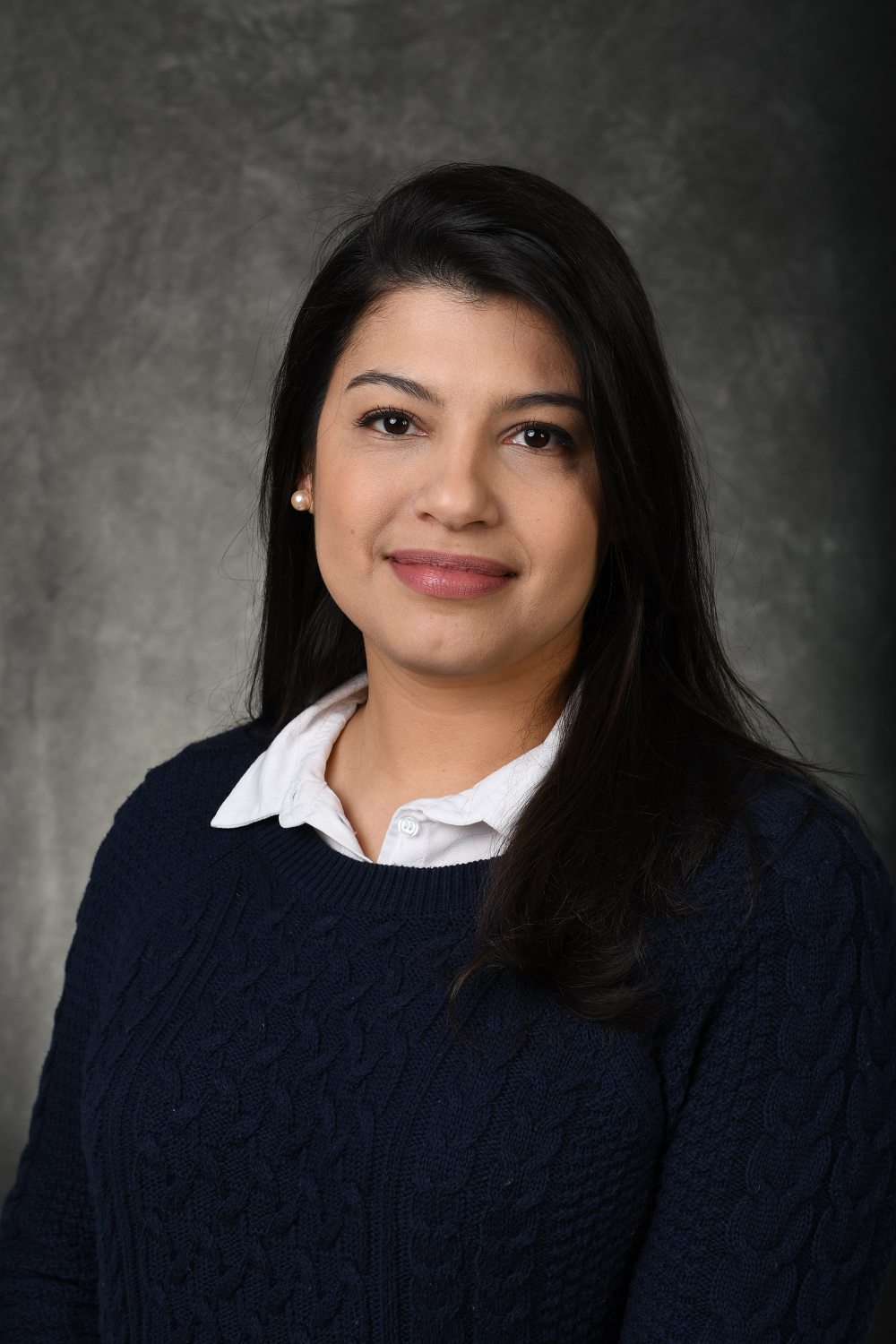
Giovanna Gobbi Alves Araújo (São Paulo, 1981-Providence, 2025)
Giovanna Gobbi Alves Araújo was a doctoral student, professor, and researcher whose work in the environmental humanities left a profound mark on the Department of Hispanic Studies at Brown University, where she joined in 2022. Her dedication to academic life is a testament to a geoaesthetic and sociopolitical commitment to the memories and ecosystems of the American continent.
Her distinguished trajectory at the University of São Paulo (USP) took her from her bachelor's degree (2007) to her master's (2015) and her doctorate in Brazilian Literature (2021). During this period, a Fulbright fellowship at the University of North Carolina at Chapel Hill (2018-2019) rewarded her excellence and deepened her vocation to pursue training in other institutional settings. As a resident researcher at the Biblioteca Brasiliana Guita e José Mindlin in São Paulo (2019-2022), Giovanna turned the archive into a space for critical dialogue. There, she made discoveries regarding the Quilombo dos Palmares and studied the epic of resistance in nineteenth-century Brazil, unraveling the tensions between official historiography and Luso-Brazilian literature. Her teaching work, in both Portuguese and English, was equally prolific; she designed and taught courses on Indigenous and Afro-descendant representation in texts by authors such as Antônio Castro Alves and Antônio Gonçalves Dias, revisiting the corpus in light of urgent reflections on oppression, abolitionism, and the continued relevance of marginalized identities.
At Brown University, her explorations expanded to include nineteenth and twentieth century Hispanic American iconography. Drawn to counter-hegemonic paradigms of representing nature in the face of climate change, she analyzed the impact of extractive capitalism and colonialism in Latin America and other regions. She reflected on and co-developed concepts such as escritura-río and aqueous consciousness, understanding hydrological sources as flows of remembrance and survival. For those of us who shared in her presence, the gift of her intellectual generosity, altruism, and commitment in the face of crises remains with us. Her contributions to Latin American cultural and literary criticism live in her varied texts and also in the prize we have planted in her honor in 2026. We hope that the seed of this award fosters essays and contributions to the community from a relational humanistic perspective—one that connects worlds, languages, and shores, as only rivers know how to do.
***
Giovanna Gobbi Alves Araújo fue una estudiante de doctorado, profesora e investigadora cuya labor en las humanidades ambientales dejó una huella profunda en el Departamento de Estudios Hispánicos de la Universidad de Brown, donde ingresó en 2022. Su entrega a la vida académica es testimonio de un compromiso geoestético y sociopolítico con las memorias y los ecosistemas del continente americano.
Su esmerada trayectoria en la Universidad de São Paulo (USP) la llevó de la Licenciatura (2007) a la Maestría (2015) y al Doctorado en Literatura Brasileña (2021). Durante este periodo, la beca Fulbright en la Universidad de Carolina del Norte en Chapel Hill (2018-2019) premió su excelencia y alimentó su vocación por formarse en otros ámbitos institucionales. Como investigadora residente de la Biblioteca Brasiliana Guita e José Mindlin en São Paulo (2019-2022), Giovanna hizo del archivo un espacio de diálogo crítico. Entre hallazgos sobre el Quilombo dos Palmares, estudió la épica de la resistencia en el Brasil decimonónico, desentrañando las tensiones entre la historiografía oficial y la literatura luso-brasileña. Su labor docente, en portugués y en inglés, fue igualmente prolífica; diseñó y dictó cursos sobre la representación indígena y afrodescendiente en autores como Antônio Castro Alves y Antônio Gonçalves Dias, revisando el acervo a la luz de reflexiones impostergables sobre la opresión, el abolicionismo y la vigencia de las identidades marginadas.
Como candidata al doctorado en la Universidad de Brown, sus exploraciones se expandieron hacia la iconografía hispanoamericana de los siglos XIX y XX. Atraída por los paradigmas contrahegemónicos de representación de la naturaleza frente al cambio climático, analizó el impacto del capitalismo extractivo y el colonialismo en América Latina y otras regiones. Meditó y codesarrolló conceptos como la escritura-río y la aqueous consciousness, entendiendo las fuentes hidrológicas como flujos de remembranza y supervivencia. En quienes compartimos su presencia queda el regalo de su generosidad intelectual, su altruismo y su compromiso ante las crisis. Sus contribuciones a la crítica cultural y literaria de América Latina viven en sus textos y también en el premio que en el 2026 hemos plantado con su nombre. Esperamos que la semilla de este premio fomente ensayos y contribuciones a la comunidad desde una perspectiva humanística relacional, que vincule mundos, lenguajes y orillas, como solo saben hacerlo los ríos.
Four Seasons of Giovanna's River*
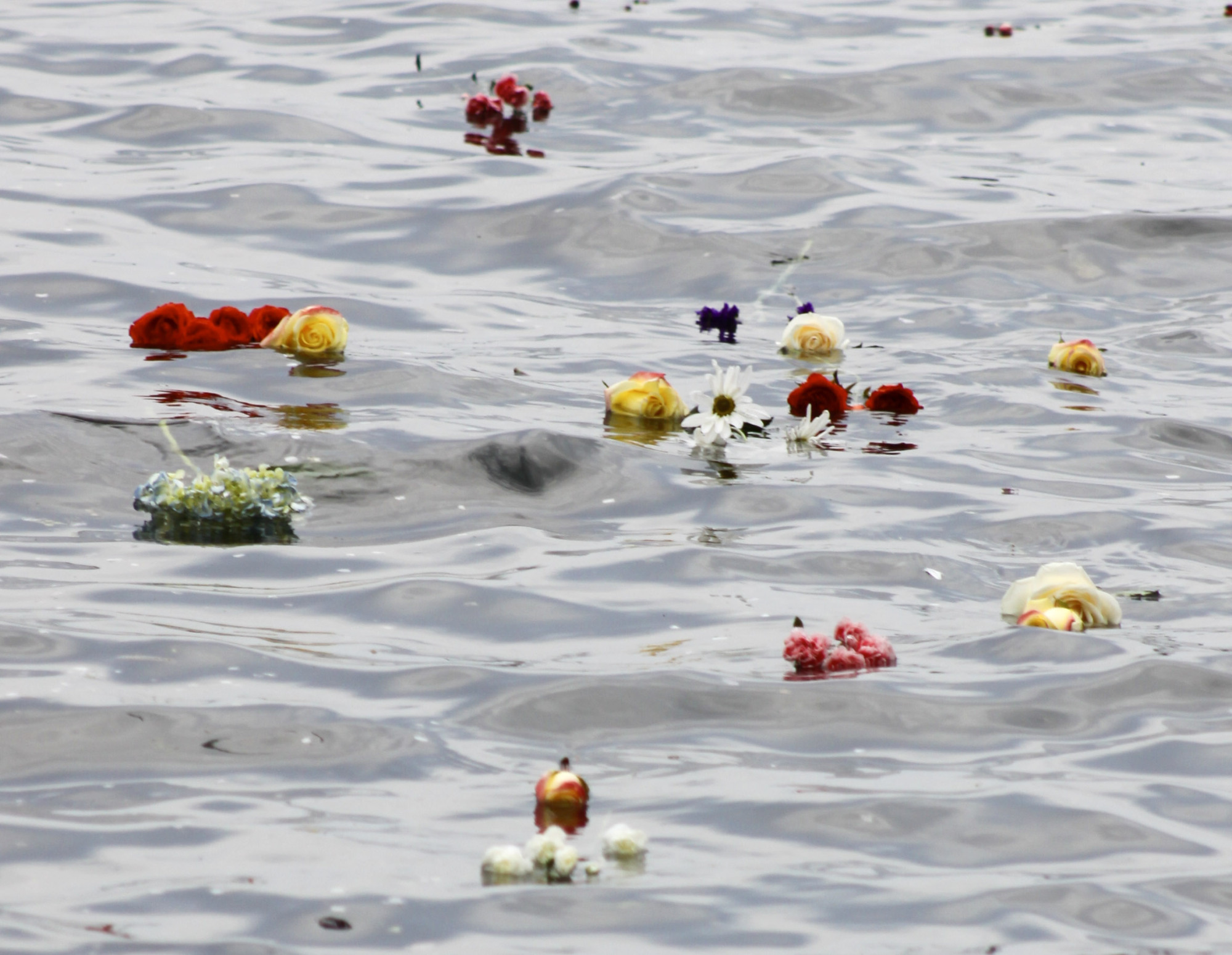
Providence, 5/6/2026. Photo by Sophia Rousseau.
Felipe Martínez Pinzón
In these two pages I undertake a double task: to celebrate Giovanna's intellectual legacy and, in dialogue with it, to explain a little about the event we are hosting to celebrate her today. I want to begin by thanking all the people in the department. Sarah Thomas, our chair, for all her firm and constant support, great heart and leadership. Artist and archivist Patricia Figueroa, the Hispanic Studies team (Sheena, Candace, Olivia), and especially the students on the committee for Giovanna's life celebration—Yaz, Jamila, Helo, Mari, Flor, Victoria, Roberto, Molly, Sara, Irene, and Henrry. They have made a collage of affections and talents to celebrate Giovanna. In the multiple registers we have had and will have today—the sung, written, read, and painted voice—lies the multiple portrait of Giovanna, but also a picture of the heart and talent of this, her community.
Giovanna joined Hispanic Studies in 2022. She was already a fluvial intellectual, a connector of spaces, languages, traditions, and histories. Her writing, like a river, has several ports of call. I will dock at four very briefly, pausing also at the stations of the program.
First Port. Giovanna, Archivist and Fabulist
As I said, today's program is a collage of voices, a living archive of Giovanna's intellectual legacy and the impact she has had on all of us. That living archive reflects the archivist and fabulist who came to us from Brazil, from São Paulo, after completing her PhD in letters at USP.
Her doctoral thesis had as its object—its muse, we might say—what she called the "poet-historians" of nineteenth-century Brazil: Gonçalves de Magalhães, Gonçalves Dias, and Castro Alves. Progressive, republican poets, interested in retelling history and, for that reason, like her, travelers between the present and the past, readers and fabulists of the colonial archive. Under her pen, these three poets become discoverers of possible poetic histories of Indigenous and Afro-descendant peoples in the colonial archive, makers of a new nineteenth-century nation, caught between its present of monarchy and slavery and the future to come: the republic and abolition. From that immersion in her archival passions emerges her beautifully written and documented thesis, entitled "Tamoio, Timbiras, Palmarinos: representação indígena e afrodescendente no romantismo brasileiro." This text has had a continental life in several languages. Her contribution on Gonçalves Dias appeared in 2023 in the book A Ideia como Paixão; her essay on Castro Alves, "El Quilombo de Palmares, del relato histórico colonial a la literatura del siglo XIX: desfiguraciones y resistencias," will appear this year in Chasqui. We hope her review of Planetary Longing will come out in English in the journal Contracorriente. Like the poet-historians of her thesis, she went to the past in order to contribute to the future. Her texts open a continental dialogue in Portuguese, in English, and in Spanish—as this multilingual tribute will be as well.
Second Port. Giovanna, Latin American Utopian
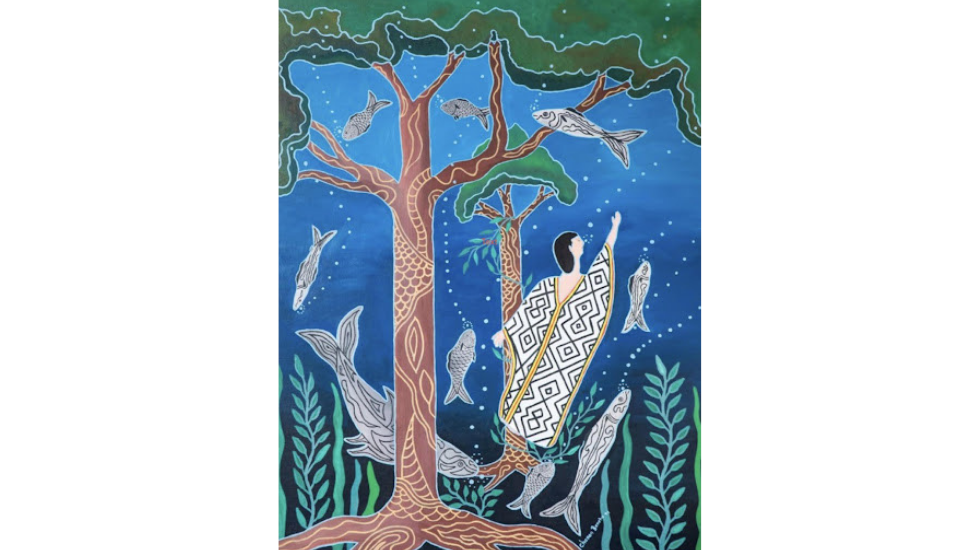
Another characteristic of Giovanna's fluvial poetics, as we have called it her critical praxis, was her commitment in her writings to utopia. Utopia—that fluvial and "brackish" horizon, half true fantasy, half fictional history—is what the painting that artist Patricia Figueroa will unveil for us will honor: a painting that, as you will see, connects the continent. I will say no more about it so as not to spoil it. If her three poet-historians rowed against the currents of colonialism and empire, propelled by the multiple winds of abolitionism, republicanism, and the romanticism of their era, Giovanna se out at Brown to row upstream, placing her new muses, the rivers, as protagonists and connectors. From the body to the landscape, Giovanna shifted from the subaltern subjectivities that the liberal and radical Brazilian Romantic poets de-marginalized setting toward the representation of the river in Spanish America during the nineteenth century. Her fluvial project was a tropical delta of rivers from the Colombian Pacific, the Venezuelan Orinoco, and the cosmopolitan Amazon. The writers and artists of that corpus are torrential: Martí, Heredia, Candelario Obeso, Gil Colunje, Julio Flórez, José Eustasio Rivera, Pérez Bonalde, Manuel María Madiedo, Agripina del Valle, Gutiérrez de Alba, Carmelo Fernández—"among others," as she used to remind me when we would get carried away with the corpus.
Third Port. Giovanna, Connector of Worlds
A weaver of voices and a continental writer, our program today also celebrates Giovanna as a connector of worlds. The vastness of her reading flowed through our classes. It has been a joy tinged with pain—"brackish" as well—to read, over these past months, what she wrote across 13 of our seminars. She delved into the histories of gold in the Colombian Pacific and wrote about the film Chocó. She wrote about the "serpentine, agile, and vibrant writing" (her words) of Arguedas in his poetry collection Katatay, which she called “escritura-río”. With her ear finely tuned to the water-music of that poetry, she sharpened her critical lens to say that "in Katatay, rivers sound, roar, and sing. They acquire a voice that projects from the deepest depths to the most distant landscapes, becoming the vehicle of Andean deities." She wrote about the climate crisis in Mary Louise Pratt's book Planetary Longings. She wrote about the songs of the boatmen on the Magdalena River in the nineteenth century. She led study groups with you on environmentalism, race, and gender.
She lived across from the Providence River and said farewell to us there. In the second part of this celebration of her life, we will go to that river. There, we will release a double offering for her—of flowers and of poems—so that it may travel until it reaches her. At Brown, for Giovanna, the ever-changing river transformed, like her own writing, into many things. When she wrote about Arguedas, she seemed to me to be writing about herself. She also wrote in her luminous Spanish (I translate): “the river was a representation of vitality, a vehicle of welcome and memory; a striking and trembling form of Latin American writing, destructive power, renewing force, and capable of engendering revolutionary social resonances.”
Last but not least, from the waters of Portuguese to Spanish to English, her prose will live on the virtual page of our department through a prize Victoria will unveil, explain and inaugurate during this celebration. On that page her legacy will live in the form of a prize, bearing her name for the best essay, in the Ibero-American world. Like her critical prose, that prize will bring new waters of future voices that, with new stories, new archives, and new rivers, will continue to keep alive the “encontro das águas”—the meeting of the waters—of her intellectual and vital project. The essays prized in her name will be, and I quote from Arguedas's poem "Oda al Jet," "golden scales from all the seas and rivers."
Last Stop: The Station of Memory
We arrive at the last of my ports of call. A cultivator of a sensibility attuned to the archive, Giovanna adored the tactile world of paper and handwriting. Many of us have exquisite letters from her, beloved and adorned with her serpentine calligraphy. And so today, to celebrate her, we have letters to take with us as a keepsake of her memory — a reminder to carry home of what we are doing here today: hearing words from her colleagues so as to keep speaking with her through her texts; seeing paintings to bring her back through the river of memory; delivering for her flowers and messages into the river. These are all offerings—pagamentos—to a presence that brought us so much love and left a living inspiration among us.
Thank you, Giovanna.
*Speech read at Giovanna’s Celebration of Life at Rochambeau House on May 6th, 2026
-----
Carta de agradecimento
Cynthia Gobbi
Boa tarde a todos,
Obrigada por me cederem a palavra. Estou muito emocionada com a dedicação e o carinho com os quais o Departamento de Estudos Hispânicos, os alunos, a professora Sarah e, especialmente, o professor Felipe organizaram esta celebração tão gentil e sensível para a minha amada irmã.
Giovanna sempre foi a minha referência de vida. Desde a adolescência, eram notáveis sua empatia pelas pessoas, sua análise crítica das classes sociais e seu apreço pela justiça em nosso país. A indignação diante das desigualdades e sua paixão pelo conhecimento fizeram da escola seu lugar favorito. Giovanna amava as artes e, certa vez, me disse que, se tivesse tido a oportunidade, teria se dedicado a todas elas: tocar piano, dançar e pintar, além da escrita, que já fazia parte de sua vida.
Sua conexão com os poetas abolicionistas começou ainda muito jovem, quando me ensinava sobre os rios, povos originários e o colonialismo descritos nos poemas de Castro Alves. Foi essa paixão que a guiou pela trajetória acadêmica em busca de novos desafios e que se refletiu no perfeccionismo de suas obras. A sua coragem e determinação para seguir o seu sonho, apesar das adversidades, sempre foram motivo da minha mais profunda admiração. Além de todo conhecimento que ela tinha em sua mente brilhante, ainda conseguia ser doce e muito dedicada às pessoas que estavam ao seu redor.
O sonho da Giovanna era viver em um mundo mais igualitário com oportunidades para todos, especialmente para aqueles advindos dos países em desenvolvimento. O prêmio Giovanna Gobbi representa a valorização da cultura latina e a oportunidade de novos estudantes seguirem seus passos de perseverança e amor pela arte. Eu e minha família podemos dizer que somos eternamente gratos por esse momento, que somente o departamento poderia oferecer à nossa amada Giovanna.
Giovanna escolheu a Brown e a cidade de Providence como sua casa e essa casa lhe deu a oportunidade de viver mais feliz. Obrigada a todos que se dedicaram para esse evento de celebração.
***
Thank-you Letter
Good afternoon, everyone,
Thank you for giving me the opportunity to speak about my sister. I am deeply moved by the dedication and care with which the Department of Hispanic Studies, the students, Professor Sarah, and especially Professor Felipe organized this kind and heartfelt celebration for my beloved sister.
Giovanna has always been my role model. Since her teenage years, her empathy for others, her critical understanding of social classes, and her commitment to justice in our country were remarkable. Her indignation at inequality, combined with her passion for knowledge, made school her favorite place. It always was. Giovanna loved the arts and once told me that, if she had had the opportunity, she would have pursued all of them — playing the piano, dancing, and painting — alongside writing, which was already such an important part of her life.
Her connection with abolitionist poets began at a very young age, when she would teach me about rivers, Indigenous peoples, and colonialism as described in the poems of Castro Alves. This passion guided her academic journey in search of new challenges and was reflected in the perfectionism of her work. Her courage and determination to pursue her dreams, despite adversity, have always been a source of my deepest admiration. In addition to her brilliant intellect, she remained kind and deeply devoted to those around her. As many of you know, that was simply who she was.
Giovanna dreamed of living in a more equal world, with opportunities for everyone, especially for those from developing countries. The Giovanna Gobbi Alves Araújo Prize represents an appreciation of Latin culture and an opportunity for new students to follow in her footsteps of perseverance and love for the arts. My family and I are eternally grateful for this moment — something only this department could offer in honor of our beloved Giovanna.
Giovanna chose Brown and the city of Providence as her home, and this home gave her the opportunity to live more happily. Thank you to everyone who dedicated themselves to making this celebration possible.
Bojear a una ávida lectora como Giovanna Gobbi Alves Araújo implica sumergirse en una "escritura-río" que acuna en su lecho lenguajes, temporalidades, bibliotecas transatlánticas y territorios latinoamericanos, meciéndose en un vaivén entre riberas, en un allá y acá que no encuentra reposo en su cuidado. La ecocrítica, las exploraciones andinas de José María Arguedas, la historiografía luso-brasileña y las herencias africana e indígena de su país, iluminadas a través de autores como Castro Alves y Gonçalves Dias son algunos de los afluentes que nutrió con su producción intelectual. Sus conceptualizaciones ensayísticas bebieron de lo teórico y lo poético para imaginar, desde un presente amenazado por la crisis climática, un mañana decolonial arraigado en saberes y repertorios ancestrales o subalternizados que resisten en los márgenes del archivo. Apeló al caos y la cacofonía para vislumbrar las desconexiones y las estrategias de entendimiento entre los imaginarios imperialistas y las cosmovisiones de los pueblos del Nuevo Mundo. Asimismo, en busca de prismas relacionales, se asomó colaborativamente a etimologías inestables, al inaugurar un glosario como “palimpsesto líquido” que integra términos europeos y asiáticos con aproximaciones a vocablos indígenas del Sur y el Norte (desde el quechua y los Krenak brasileños hasta los Lakota y los Cherokee). Sus sueños nos entregaron coordenadas simbióticas que instan a develar, en el espej(e)o longevo de los ríos: “un flujo de memorias en el que el pasado no está muerto, sino que guarda en sí mismo una capacidad movilizadora, generadora de significados en el futuro” (GGGA). El corpus de Giovanna, como la corriente fluvial, lleva y trae oralidades y escrituras añejas y contemporáneas, invitándonos a derribar la antinomia positivista sujeto-naturaleza para pensarnos otra vez en lo ya dicho y lo por-venir.
Water Bodies
Yaz Murray and Irene Rihuete Varea
Thinking through water bodies as a concept and not just as a category of natural elements opens up Giovanna's interests in environmental questions to include her important work on dispossessed communities, collective resistance, and racial ecologies. In the Fall of 2024 and the Spring of 2025, Giovanna co-organized a reading group called “Embodied Ecologies: Environmental Humanities in Latin America.” The reading list for this group included environmental dystopic novels, key texts on contemporary Latin American critical thought, a book on artistic methodologies involving the use of mushrooms, a volume on decolonial aesthetics, and Yanomami shaman Davi Kopenawa's book The Falling Sky. For the ones privileged enough to attend, this experience was a true insight into Giovanna's passion for both ecological practices and the study of Indigenous thought and philosophy. In particular, we want to memorialize how committed she was to the ethics of academic work, as in these sessions she raised questions about how to investigate the knowledge of Indigenous communities through respectful and non-extractive means. Giovanna's work was full of critical and generative questions, ranging from nineteenth-century literary depictions of rivers and waterfalls in Latin America, to environmental history and broader ontologies of water, and even to how water could be understood as a conceptual tool that traverses bodies and political assumptions. We are hopeful that these will reverberate over the years.